Legal News Update
Contributors: Almaida Askandar, S.H., MBA, Nita Damayanti, S.H., and Rania Adhara Safira, S.H.
Published on 1 August 2026 by IABF Law Firm, Jakarta, Indonesia.
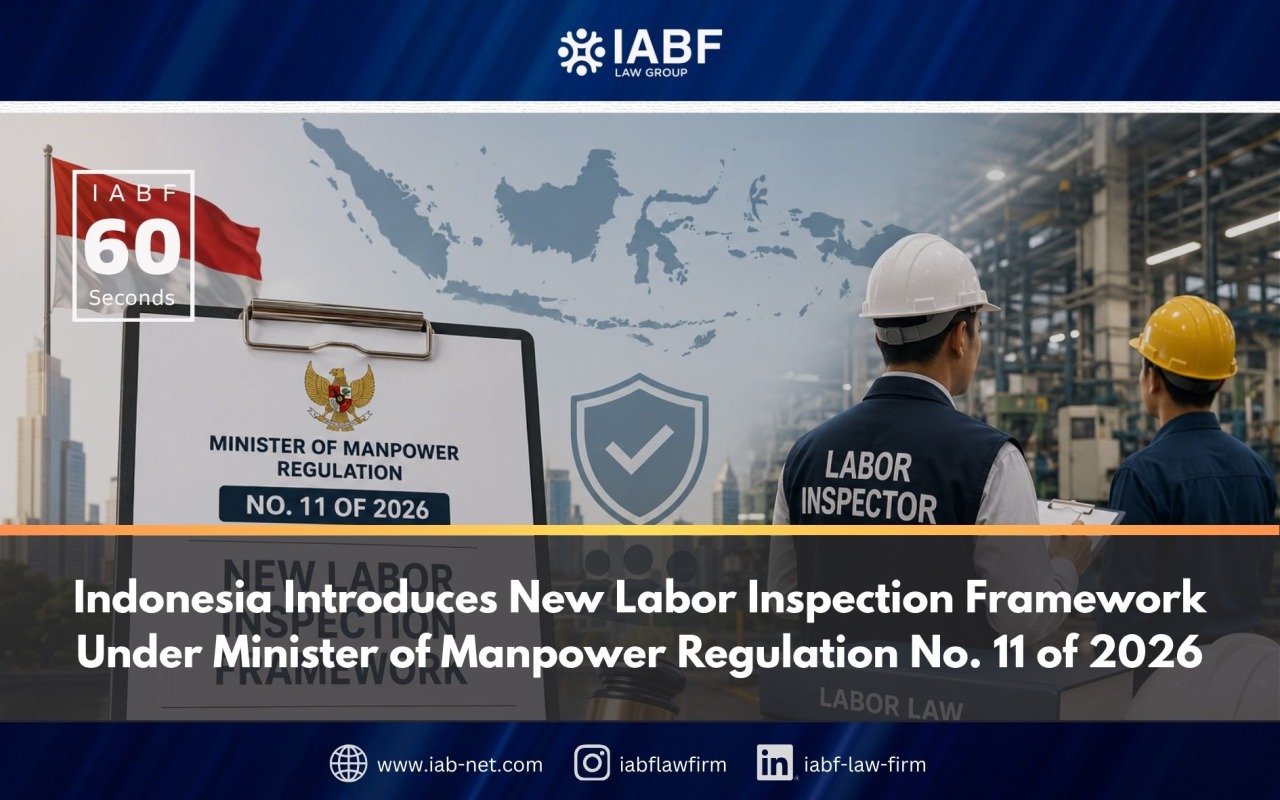
Indonesia Introduces New Labor Inspection Framework Under Minister of Manpower Regulation No. 11 of 2026
The Indonesian Ministry of Manpower has issued Minister of Manpower Regulation No. 11 of 2026 on Labor Inspection Procedures (“Regulation 11/2026“), replacing the previous labor inspection regime under Minister of Manpower Regulation No. 33 of 2016 as amended by Minister of Manpower Regulation No. 1 of 2020. The new regulation came into force on 3 July 2026 and significantly reforms Indonesia’s labor inspection system by strengthening enforcement powers, introducing mandatory digital compliance reporting through the SIAPkerja platform, and revising inspection procedures and timelines.
Key Changes Introduced by Regulation 11/2026
1. Expanded Authority of Labor Inspectors
Regulation 11/2026 substantially broadens the powers of labor inspectors. In addition to conducting supervisory functions, inspectors are now expressly authorized to take direct administrative enforcement measures where violations are identified. Among others, labor inspectors may:
-
- seal work equipment or facilities for operational purposes;
- order the suspension or prohibition of non-compliant work processes;
- suspend the workforce placement process;
- remove child workers from the workplace; and/or
- remove foreign nationals employed by an employer from the work location and/or workplace that is not in accordance with the provisions of laws and regulations.
2. Compliance Self-Assessment through SIAPkerja platform
A notable feature of Regulation 11/2026 is the formal integration of SIAPkerja into Indonesia’s labor inspection system. Companies now have the option to complete electronic compliance self-assessments through the SIAPkerja platform together with employee representatives. Where such a self-assessment is carried out, the completed checklist will subsequently be reviewed and verified by labor inspectors, with the verification results recorded within the inspection reporting system. Importantly, the self-assessment mechanism does not replace conventional labor inspections. Rather, it functions as an optional, additional compliance monitoring tool, while inspectors retain full authority to conduct inspections under applicable laws and regulations.
3. Revised Inspection Planning and Procedures
The regulation also changes how labor inspections are planned and carried out. Previously, inspectors were required to satisfy minimum monthly inspection quotas. Regulation 11/2026 removes these quantitative targets and instead adopts a risk- and work-plan-based approach, under which inspections are conducted according to annual and monthly work plans established by labor inspection units. The inspection methodology has likewise been updated to include:
-
- monitoring and surveillance activities;
- observations and assessments;
- requests for information and clarification;
- examination of employment documents; and/or
- verification of company self-assessment results submitted through SIAPkerja.
In addition, the maximum period allocated for completing inspections has been extended from three business days under the previous regulation to 60 business days.
4. Stronger Administrative Enforcement
Regulation 11/2026 brings enforcement measures for labor violations directly into the non-judicial inspection process. Labor inspectors may now issue written instructions through an Inspection Note (Nota Pemeriksaan), determine workers’ rights, and take steps toward administrative sanctions. If an employer fails to comply with a Second Inspection Note (Nota Pemeriksaan II), the Head of the relevant Labor Inspection Unit may recommend administrative sanctions to the competent authority or instruct that a formal investigation be initiated. This is a significant change from the previous framework. Previously, Inspection Notes mainly served as formal warnings. Under the new regulation, they may lead more directly to administrative sanctions or further legal action.
Practical Implications for Employers
The new regulation reflects the Government’s move toward a more modern labor inspection system by combining digital compliance monitoring with stronger enforcement measures. In response, employers should review their current employment practices to identify any compliance gaps, prepare to complete the required self-assessments through SIAPkerja, and establish clear internal procedures for handling labor inspections and responding to Inspection Notes. Employers should also closely monitor all applicable compliance deadlines, as any delay or failure to take corrective action may result in administrative sanctions or further enforcement proceedings.
***
Disclaimer
This news update is prepared for general informational purposes only. The content does not constitute legal advice, a legal opinion, or counsel from IABF Law Firm. The information contained herein may not reflect the most current developments. Any quotation, distribution, or use of this information for any purpose is solely at the user’s own risk.