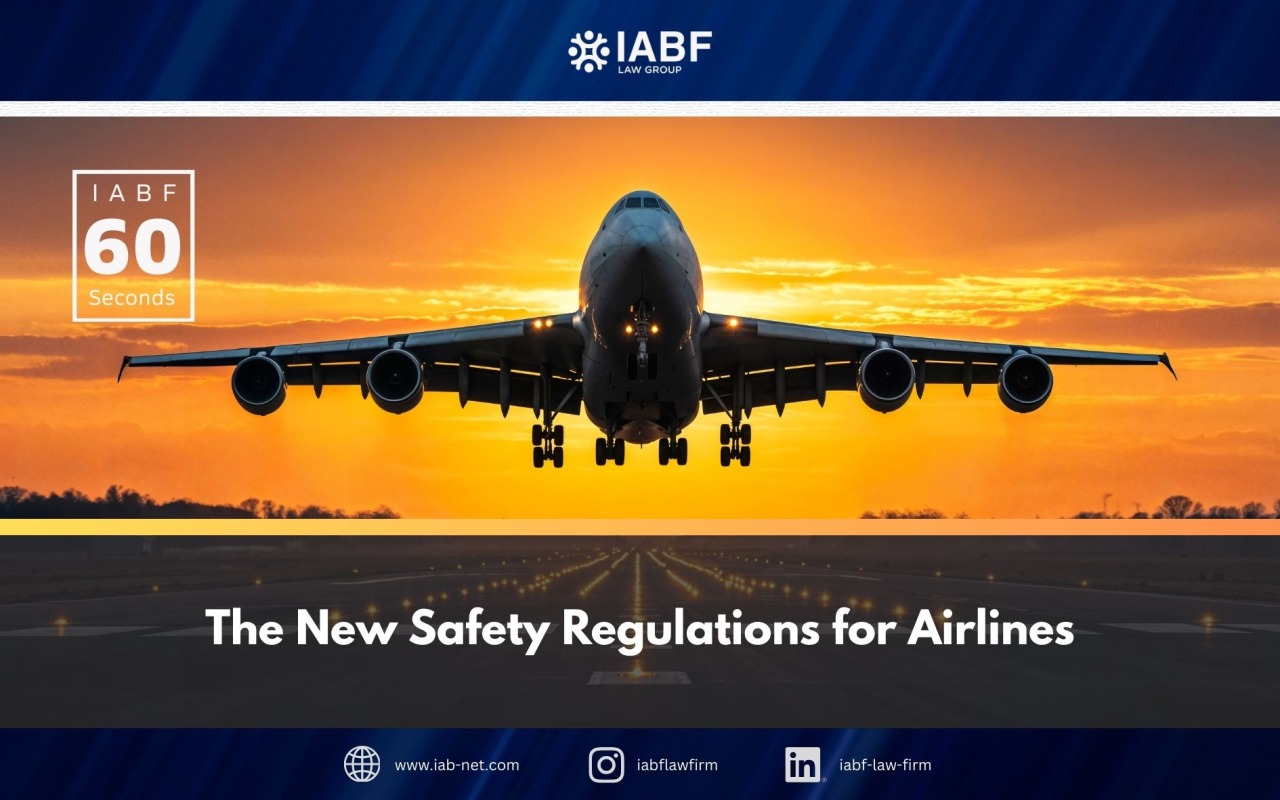
On 26 January 2026, the Minister of Transportation (“MoT”) enacted MoT Regulation Number PM 2 of 2026 on Civil Aviation Safety Regulations Part 19 concerning the Safety Management System of Aviation Service Providers (“Reg 2/2026”). This regulation revokes two previous MoT regulations, namely (i) MoT Regulation Number PM 62 of 2017 on Civil Aviation Safety Regulations Part 19 regarding Safety Management System; and (ii) MoT Regulation Number PM 74 of 2017 on Civil Aviation Safety Regulations Part 830 regarding Investigation Procedures of Civil Aircraft Accidents and Serious Incidents. This article focuses on the new safety requirements applicable to airlines following the promulgation of Reg 2/2026 on 3 February 2026.
Under Reg 2/2026, every aviation service provider is required to establish, implement, evaluate, and continuously improve a Safety Management System (“SMS”) that refers to the National Aviation Safety Program (“NASP”). The term “aviation service provider” expressly includes aircraft business entities, commonly referred to as airlines.
The regulation defines an SMS as a systematic approach to managing safety, covering organizational structure, accountability, responsibility, as well as the necessary policies and procedures. For aircraft business entities, the SMS must obtain legalization from the MoT. Such legalization is granted in the form of an approval letter covering both the SMS manual and the SMS implementation plan.
Pursuant to Articles 3 through 7 of Reg 2/2026, the SMS must, at a minimum, consist of the following components:
- Safety policy and objectives, including safety policies, safety objectives, and allocation of resources;
- Safety risk management, including hazard identification, risk assessment, and risk mitigation;
- Safety assurance, covering safety performance measurement and monitoring, continuous improvement of the SMS, and management of change; and
- Safety promotion, including safety training, education, and safety communication.
Failure to comply with Reg 2/2026 may result in administrative sanctions. These sanctions apply to non-compliance with the obligation to establish and implement an SMS, to maintain a safety reporting system, and to report accidents or occurrences that pose significant safety risks. The sanctions may include written warnings, suspension of licenses, and/or revocation of licenses, in accordance with the applicable aviation laws and regulations.
Finally, aircraft business entities whose SMS had already been legalized prior to the enactment of Reg 2/2026 are required to adjust their systems to comply with the new regulation within six months from its promulgation.
Disclaimer
This news update is prepared for general informational purposes only. The content does not constitute legal advice, a legal opinion, or counsel from IABF Law Firm. The information contained herein may not reflect the most current developments. Any quotation, distribution, or use of this information for any purpose is solely at the user’s own risk.
__________________________
Published by: IABF Law Firm
Published on: 20 February 2026